


Every so often a client watches the first playback and goes quiet for a second. Then: “Why do I look different?”
Nothing about them changed. They are in the same shirt they drove over in. What changed is the room — where the light is coming from, how far they are sitting from the wall behind them, and which lens is on the camera. Those decisions were made before they arrived, and they are most of what people mean when they say footage looks cinematic.
There is no cinematic button. It is a short list of choices about light and distance, and they are the same choices whether you are shooting a feature film or a forty-second clip for LinkedIn. Here is how we make them at BeKnown Studio in Scottsdale, AZ.
Light Does Almost All of the Work
If you only fix one thing, fix the light. It matters more than the camera, more than the backdrop, and far more than the resolution you shoot in.
Soft light comes from big sources
The size of a light relative to the person is what makes it soft. A small, bare lamp throws hard-edged shadows that pick out every line on a face. The same lamp pushed through a large diffuser wraps around the face instead, and the shadow edge becomes a gradient rather than a line. That is the difference between looking lit and looking caught.
Direction is a decision, not an accident
Light pointed straight at someone from the camera position flattens them. Move the key light off to one side and slightly above eye level and the face gets shape back — a bright side, a shadow side, and a soft transition between them. That transition is where a face reads as three-dimensional.
Contrast is controlled by the fill, not the key
Once the key is placed, a second softer source on the opposite side decides how deep the shadow goes. More fill reads friendly and corporate. Less fill reads serious and filmic. Neither is wrong — but it should be chosen on purpose, because it sets the mood of the whole piece.
Separation stops people sinking into the background
A light behind and to the side puts a thin edge along the shoulder and hair. It costs nothing and it is the clearest marker of a professionally lit shot, because it lifts the subject off whatever is behind them.
We light with Amaran, Godox and GVM fixtures across the studio, and every set keeps the same kit and the same approach, so a shoot in one room cuts together with a shoot in another.
Distance Is the Part Nobody Mentions
This is the most common reason a home or office setup looks flat, and it has nothing to do with equipment.
When someone sits a foot from the wall, the light that hits them also hits the wall. The background ends up the same brightness as the face, in focus, with every scuff and outlet visible. The eye has nowhere to go.
Move that same person eight or ten feet forward and the physics change. Light falls off quickly with distance, so the wall goes darker on its own. The background stops being a surface and becomes a tone. Suddenly there is depth in the frame, and nobody touched a camera setting.
Space is the one thing you cannot improvise. Our studio is more than 1,500 square feet, and most of that is not where people sit. It is the room behind them.
The Lens Changes How Someone Looks
Put a wide lens close to a face and the nose comes forward, the ears fall back, and the person looks subtly unlike themselves. It is why a phone held at arm's length rarely flatters anyone.
Step the camera back and use a longer lens for the same framing, and the face returns to its real proportions. Longer lenses also compress what is behind the subject, pulling the background into a smoother, simpler field. Open the aperture and it softens further, so attention lands where it should.
None of this requires exotic glass. It requires enough room to put the camera far enough away — which brings us back to distance.
Colour Is Decided Before You Film, Not After
Mixed light is what makes skin look wrong. A window throwing cool daylight on one side of a face while a warm bulb hits the other gives you a subject who is two colours at once, and no amount of grading fully repairs it.
A controlled room removes the argument. Every fixture is set to the same colour temperature, there is no daylight leaking in to fight it, and the camera is balanced once. What comes out looks right before anyone opens an editing timeline — and because it is consistent, episode four matches episode one.
That consistency is worth more than any single beautiful shot. A show that looks the same every week reads as a real show.
Every Set Is Lit Before You Arrive
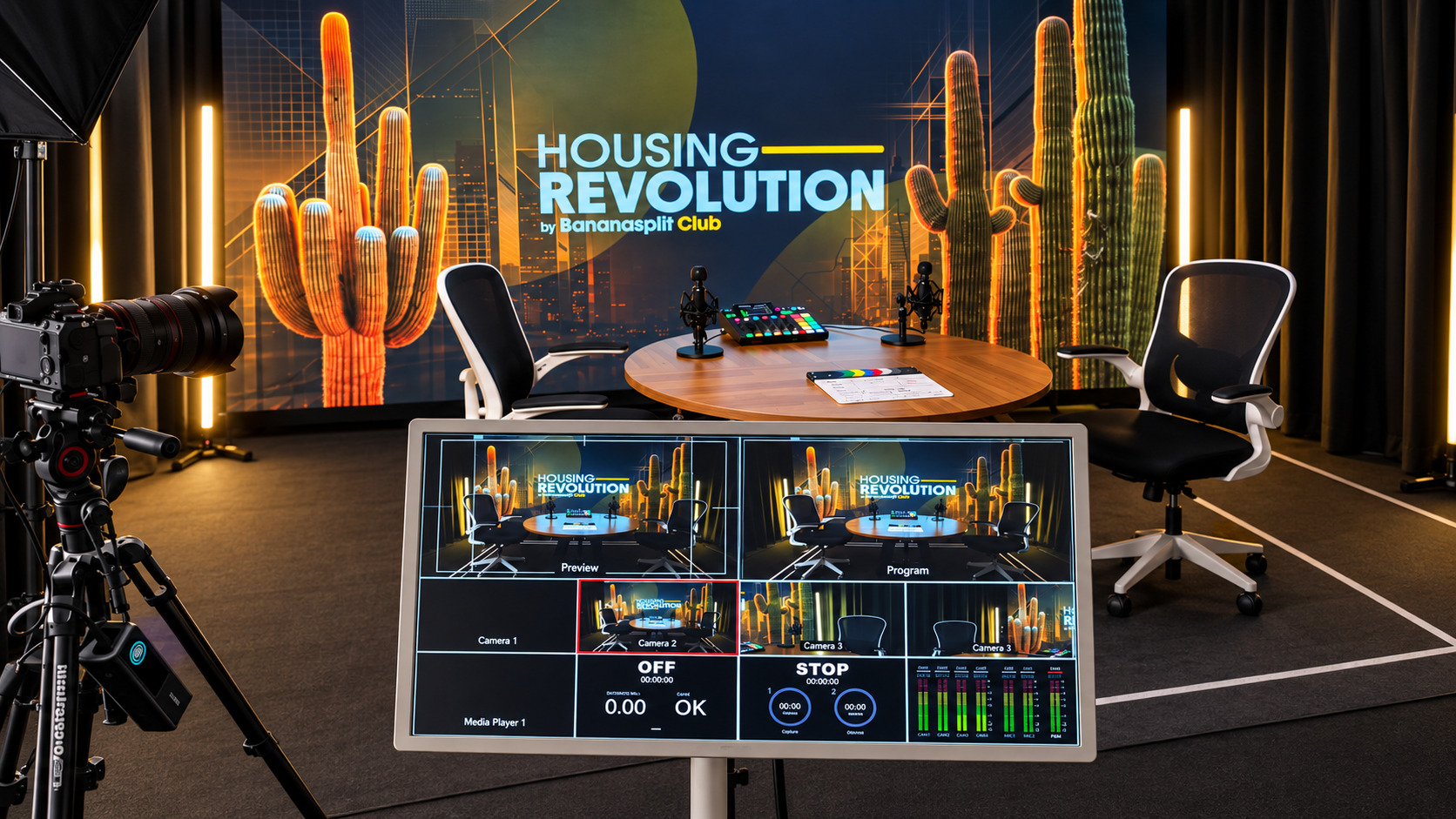
The studio has six camera-ready setups, and each one stays lit and ready:
- The LED Video Wall and News Room, where the background is real light in the room rather than something added later
- The White Podcast Room, bright and clean, for a lighter editorial feel
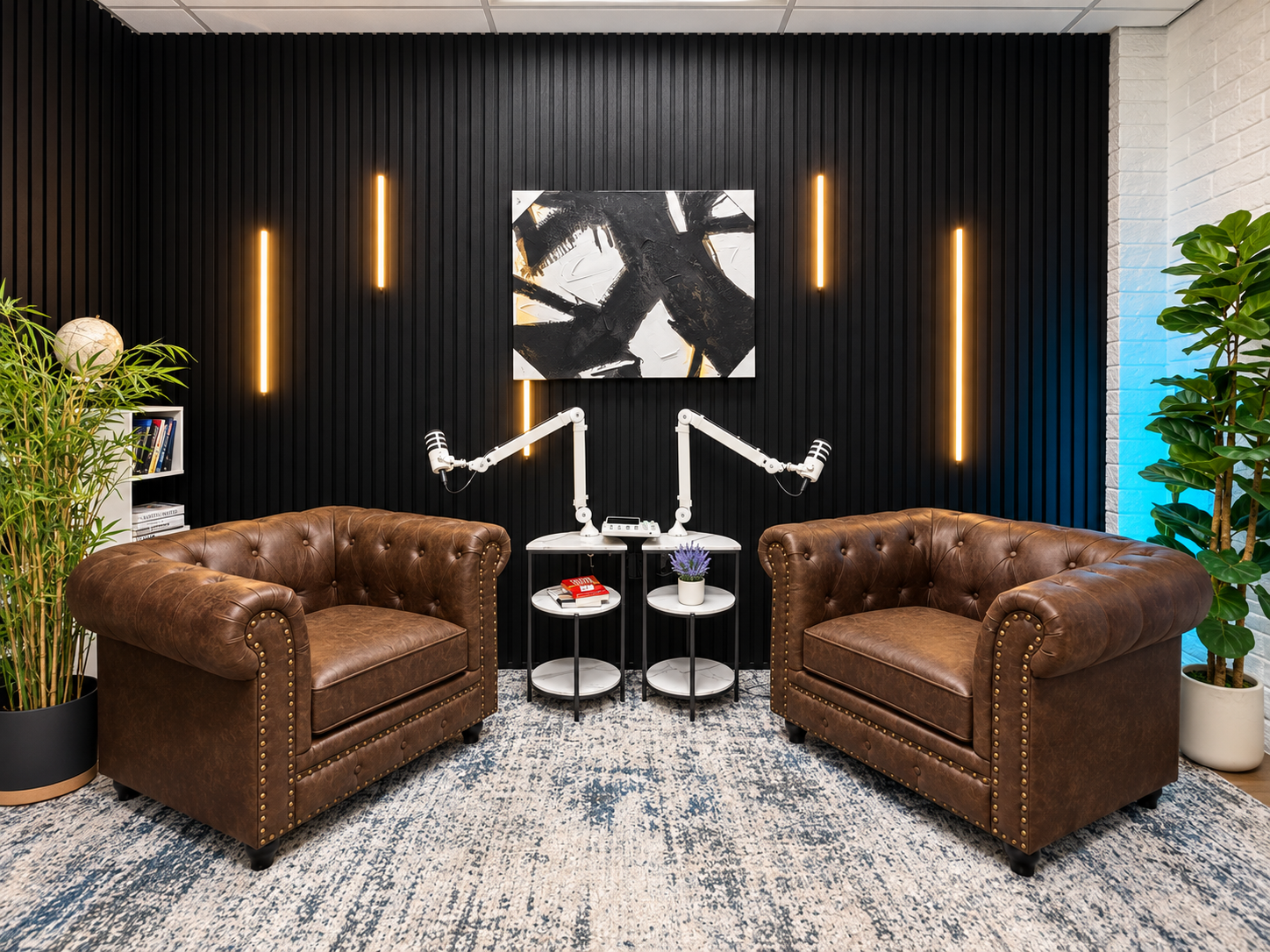
- The Black Podcast Room, with leather seating and warm accent light, for interviews with more weight to them
- The Cyclorama, a seamless white curve with no corner for the eye to catch
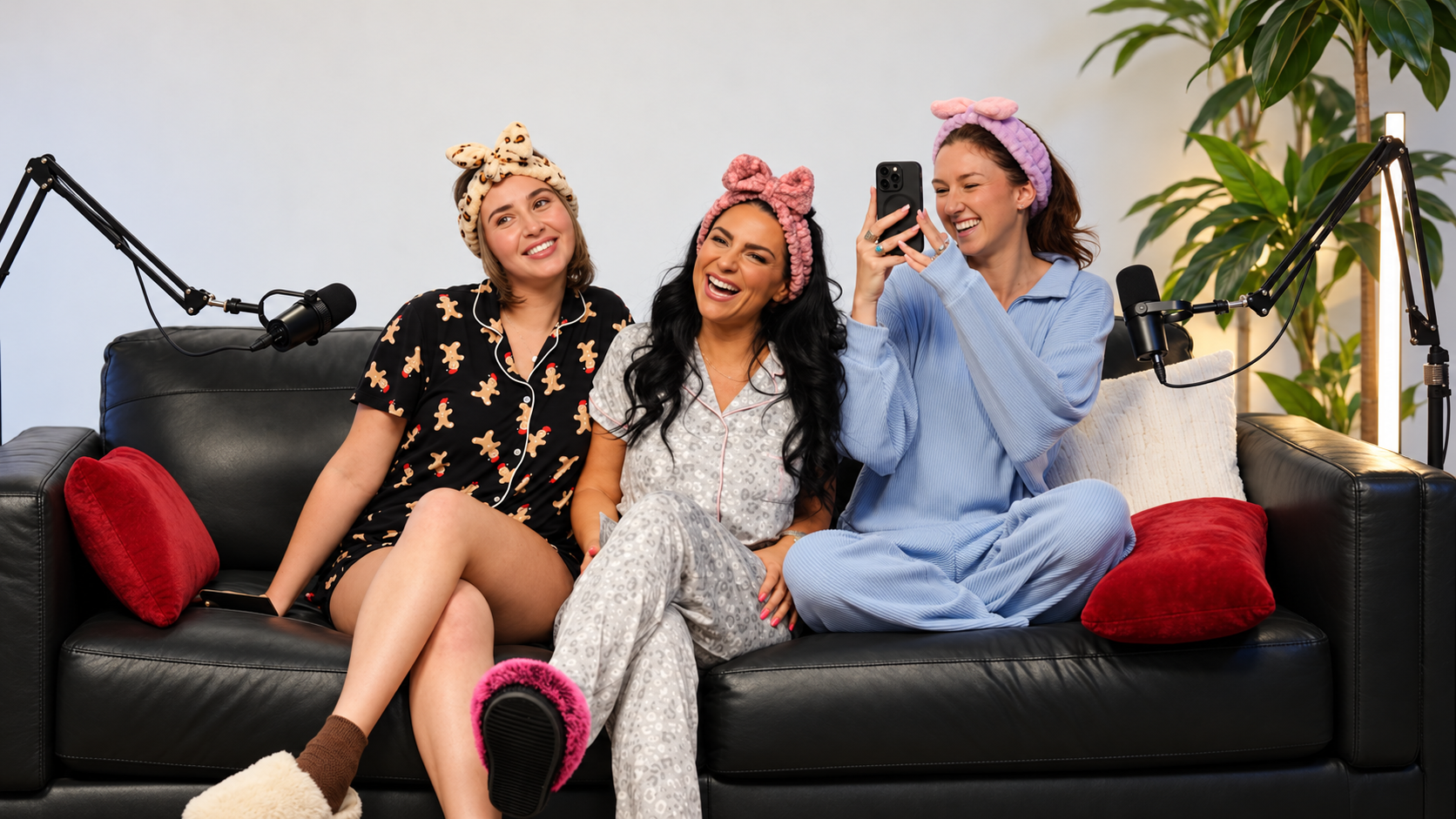
- The Couch Set-Up, for conversations that should feel like a conversation
- Green and black drops, when the background needs to be replaced or disappear entirely
The practical effect is that you are not standing around for an hour while someone rigs lights. You walk in, sit down, and the look is already there. For a client filming a month of content in a day, that hour is the difference between eight videos and twelve.
What the Cinematic Look Costs
Less than people expect, because it is not an upgrade you buy. It is the room.
Studio rental starts at $99 an hour and includes the space, the lighting and your choice of setup. Cameras, a teleprompter and raw footage transfer are added by the hour if you want them. The lighting is not a premium tier — it is already rigged, because leaving it rigged is the only way to keep the look consistent between sessions.
If you would rather not run the shoot yourself, our crew films it and our editors finish it. Same room, same gear, same look.
Why This Matters If You Are Filming for Business
People decide whether to keep watching in the first second or two, long before they have heard a full sentence. Footage that looks considered buys you the rest of the video. Footage that looks like a webcam has to win the argument twice.
There is a practical side too. Well-lit, well-separated footage cuts cleanly into vertical, survives compression on social platforms, and holds up when a clip from one shoot sits next to a clip filmed three months later. Content shot to one standard can be reused for a year. Content that is not has to be reshot.
The Short Version
Cinematic is four decisions, and only one of them involves a camera:
- Light that is big and soft, placed off to one side, with the shadow side controlled on purpose
- Distance between the subject and whatever is behind them
- A lens long enough to keep a face in its real proportions
- One colour temperature, settled before the camera rolls
Everything else — the camera body, the resolution, the backdrop — matters far less than any of those four.
If you want the full list of what is actually in the room, we wrote that up separately in What Real Podcast Studio Equipment Looks Like. And if the LED wall is what caught your eye, there is a whole piece on that too.
Otherwise, the easiest way to understand any of this is to stand in it. Come by, sit in one of the setups, and watch what happens on the monitor when someone moves a light two feet to the left.
